

The History of Inflight Magazines: From Pan Am’s 1952 Clipper Travel to the Digital Age

Updated: Aug 17
Written by Sunil Kalia, founder of inflightmagazines.com, an online platform bringing inflight magazines to a global audience beyond the flight.
This article traces the chronological history of the inflight magazine - from its origins aboard Pan Am’s flying boats to its current place in digital travel content. Written from the perspective of inflightmagazines.com, an online directory founded by a former British Airways passenger experience specialist with over 15 years in cabin product and service development, including the Concorde and First Class brands, it draws on verified sources to document a format that has shaped the passenger travel experience for more than seven decades.
Key Takeaways
The first inflight magazine was launched by Pan American World Airways in 1952, titled Clipper Travel, named after their Boeing 314 Clipper aircraft. Over 250 titles have existed worldwide since then.
KLM’s Holland Herald, first published in January 1966, is recognised as the longest-running inflight magazine. British Airways launched High Life in 1973, and outsourced specialist publishers, including Ink Global, Spafax and Maxposure, emerged from the 1990s onwards.
The digital shift accelerated in the 2010s under cost and weight pressures, with the COVID-19 pandemic delivering sharp disruption - Delta’s Sky magazine ended its print edition in March 2020, while British Airways High Life ceased print in September 2020 before transitioning to digital curated travel content.
This article traces the format’s origins, golden era, digital transition, regional editorial identity, and the economics of publishing behind it.
What Is an Inflight Magazine?
An inflight magazine is a travel and lifestyle publication distributed by airlines to passengers, typically found in seat pockets or available via digital platforms, and serves as a curated window into destinations and airline brand identity, as outlined in our guide to inflight magazines. These magazines blend destination guides, cultural articles, and airline information with advertising from brands across luxury, travel, and lifestyle categories.
The format continues today in both print and digital forms. Many airlines maintain print editions on long-haul routes while offering digital inflight magazine editions online through apps and onboard Wi-Fi portals. Inflight entertainment has evolved into personalised digital ecosystems, including seatback systems and wireless streaming, yet the magazine format persists as a distinct medium.
The Origins: Pan Am, the Jet Age, and the Birth of the Inflight Magazine (1952-1960s)
The inflight magazine began with Pan American World Airways in 1952. The title, Clipper Travel, took its name from the Boeing 314 Clipper aircraft, which defined Pan Am’s pre-war flying-boat era. This marked the moment when airlines recognised that passengers on long-haul flights required content beyond safety cards and service menus.
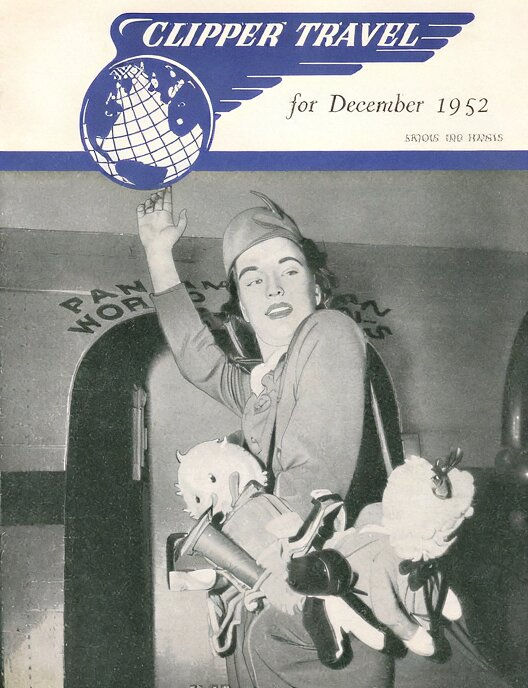
The context matters. Post-war transatlantic and transpacific routes were expanding. No personal seatback screens, no inflight entertainment as we know it. The magazine filled a practical need while subtly reinforcing the airline’s brand through fleet details, route information, and destination previews.
KLM’s Holland Herald followed in January 1966, establishing what would become the longest-running title in the format’s history. That same year, American Airlines launched American Way, which would become one of the most enduring titles in US aviation. These early titles set a template that airlines worldwide would adopt: the inflight magazine as a window onto destinations served and an extension of airline brand identity.
The Golden Era: Editorial Ambition and Brand Identity (1970s-1990s)
British Airways launched High Life in 1973, marking the beginning of what many consider the format’s golden era. The 1980s marked a boom in the production of inflight magazines. Print volumes swelled, long-form destination features became standard, and freelance rates for writers and photographers reached levels that rivalled consumer titles.
Editorial identity became a competitive element. Each magazine reflected its airline’s national culture and network strengths:
Airline | Inflight Magazine | Editorial Character |
|---|---|---|
Iberia | Spanish and Latin American cultural depth | |
LOT Polish Airlines | Polish perspectives and Central European travel | |
Garuda Indonesia | Southeast Asian vibrancy and Indonesian heritage | |
ANA | Japanese aesthetics and Asia Pacific business travel |

The rise of outsourced specialist publishers transformed the business model. Ink Global was founded in 1994, starting with a single London-Beirut route for a startup airline before scaling to produce magazines for more than 20 carriers, including United’s Hemispheres, easyJet’s Traveller, and Virgin Atlantic’s Vera. Panorama Media Corp and other specialists, including Spafax and Maxposure Media Group, enabled airlines to manage editorial production externally while maintaining brand alignment through colour palettes, typography, and recurring section structures.
These publishers created editorial rhythm - consistent sections like route news, insider guides, and crew recommendations that built familiarity across issues. Inflight magazines typically featured a diverse range of content, including travel articles, destination guides, and general-interest pieces on business, entertainment, health, and lifestyle.
The Digital Shift and the Pandemic Disruption (2010s-2020s)
Despite the challenges facing traditional publishing, inflight magazines held up better than many other consumer print titles, indicating a unique resilience in the market. Yet cost and weight pressures mounted. Paper contributes to fuel burn - a matter of operational economics that airlines could not ignore across global networks.
Emirates began stepping away from print as early as 2008, when weight and fuel pressures prompted the airline to remove magazines from the seat pockets of its new A380 aircraft and migrate the content to the iCE inflight entertainment system. What started as an A380-specific measure set the direction for the wider fleet. Through the 2010s, the print footprint was gradually reduced as iCE became the default channel for onboard editorial, before Emirates discontinued Open Skies entirely in April 2020 and folded its role fully into the digital system. The twelve-year arc from A380 trial to fleet-wide close was less an abrupt ending than a phased withdrawal from print.
The COVID-19 pandemic delivered the sharpest disruption. Delta’s Sky magazine ended its print edition in March 2020 amid route cuts and hygiene concerns. British Airways High Life ceased print publication in September 2020, transitioning to curated digital travel content via apps and websites. American Airlines’ American Way was discontinued in 2021, ending a title that had been published since 1966.
Many airlines have ceased publishing the print versions of their inflight magazines, opting instead to produce online versions (flip-books or PDFs), reflecting a significant shift towards digital formats in the industry.
Hybrid models emerged. Some carriers maintained print in long-haul premium cabins while offering digital archives. The case for preserving discontinued titles strengthened - these magazines serve as records of aviation history, tourism evolution, and graphic design trends. Back issues from the 1970s capture airports, aircraft interiors, and destinations that have now changed or no longer exist in the same form.
A Region-by-Region View of Editorial Identity
Editorial identities diverge sharply by geography, reflecting the world’s diverse travel cultures:
Europe: Titles like KLM’s Holland Herald and the former British Airways High Life incorporated continental sophistication with art, history, and intra-European city coverage alongside long-haul destination features. Iberia’s Ronda emphasised Iberian heritage and Latin American connections, while newer carriers such as Wizz Air have developed their own WIZZ inflight magazine to reflect a Central and Eastern European low-cost network.
Americas: United’s Hemispheres and Air Canada’s enRoute focused on practical travel and business hub coverage, often with bilingual elements for cross-border routes.
Middle East: The region's flagship carriers historically used their magazines to project ambition beyond the cabin. Emirates' Open Skies blended luxury and global exploration, reflecting Dubai's position as a transit hub, until it was discontinued in April 2020. Turkish Airlines' Skylife showcased Istanbul as a meeting point of continents during a long print run that has since ended.
Asia Pacific: Singapore Airlines and carriers like Garuda Indonesia use their magazines to connect regional business centres and resort destinations.
Format also varies by route length and carrier type, with premium long-haul carriers tending towards substantial print magazines, while short-haul or low-cost carriers favour slimmer editions or digital-only content.
Inflight Publishing Today: The Business Behind the Magazine
A 2014 survey by the Airline Passenger Experience Association (APEX) found that the average passenger spends about 7% of their flight time reading the inflight magazine, rising to 12% for passengers aged 55 and over.
Publishing decisions now weigh multiple factors:
Paper weight: Contributes to fuel burn across long-haul fleets, a calculation that has hardened as sustainability targets tightened
Distribution logistics: Managing print runs across hubs, outstations, and aircraft turnaround windows
Language versions: Bilingual or multilingual editions for international and regional routes
Digital alternatives: Apps, onboard Wi-Fi portals, and downloadable PDFs that extend reach beyond the cabin
The economics behind each decision are not uniform. The same fuel-burn calculation that prompted some carriers to discontinue print has, for others, justified continued investment - balanced against the editorial value, advertising revenue, and brand expression a printed magazine delivers. Sustainability is part of that equation, not an opposing force. Lighter paper stocks, recycled content, regional print runs, and shorter print cycles allow airlines to preserve the format while addressing their environmental cost.
Advertising revenue remains a meaningful counterweight. Watches, jewellery, fragrances, automotive, financial services, and tourism boards continue to value an editorial environment where readers have actively chosen to engage with travel content. For carriers that have retained print, the magazine represents a measurable commercial asset, not only a cost line. The publishing economics that have driven some titles to close are the same economics that, applied differently, keep others in print.
From Seatback to Sofa: Where Inflight Magazines Live Today
The inflight magazine tradition continues. Some carriers maintain print on select routes. Others have moved entirely to digital. Readers can look beyond the cabin to explore content once accessible only mid-flight.
inflightmagazines.com brings together titles from airlines worldwide in a single directory, organised by region and carrier, underpinned by a clear purpose and a set of values that extend airline-crafted content beyond the cabin.
Whether you want to check a destination guide before your trip, visit the archive of a discontinued title, or simply relax with travel content from the sofa, the platform lets you enjoy this editorial format on any device, at any time.
Readers can learn more about the platform’s origins on the About the Founder page.

About inflightmagazines.com
inflightmagazines.com brings the iconic inflight magazine experience home to the café, to the commute, to wherever you are right now.
From seatback to sofa, on any device, we help travel-minded readers stay connected with destination and lifestyle content from airlines, hotels and attractions.
Consider it your Seat 1A boarding pass to a world of travel inspiration, destination spotlights, culture, lifestyle and fashion, curated across the genre in one place for the first time.
Frequently Asked Questions
Are inflight magazines still available onboard?
Many full-service airlines continue to offer print magazines on at least part of their network, particularly on long-haul international routes. Others have shifted to digital-only editions, PDFs, or digital flipbooks. Availability varies by airline, route, and cabin class.
How can I read an inflight magazine after my flight has finished?
Readers can often find digital versions on the airline’s own website or app, sometimes as downloadable PDFs or interactive page-turning editions. inflightmagazines.com helps by organising these digital editions into a browsable directory by airline and region, making it easier to save and enjoy content from a recent journey or to discover magazines from carriers you have not yet flown with.
Do low-cost airlines publish inflight magazines as well?
Some low-cost and leisure carriers do produce magazines, though formats tend to be slimmer and more commercially focused - often packed with pre-order options for duty-free spirits, add-on services, and ancillary revenue offers. Others rely on digital content or do not offer a magazine at all. Jetstar’s What’s Next is one example of a commercially oriented title from the budget sector.
What does an airline or publisher gain by listing in the inflightmagazines.com directory?
Airlines and publishers gain extended visibility for their existing editorial investment, reaching travel-minded readers who actively choose to engage with inflight content beyond the cabin. A listing makes it easier for advertisers and partners to discover the title and understand its editorial positioning, without additional print or distribution costs.
How can advertisers work with inflightmagazines.com?
While onboard advertising is booked directly with airlines or their publishing partners, brands can work with inflightmagazines.com by placing banner campaigns on regional and magazine pages. The premium banner location positions the ad prominently to readers actively browsing inflight magazines - an audience in an aspirational, forward-looking state of mind that advertisers in travel, hospitality, and luxury categories find particularly valuable.


